China’s TPU Breakthrough: How Zhonghao Xinying Filled the Pure TPU Architecture Gap
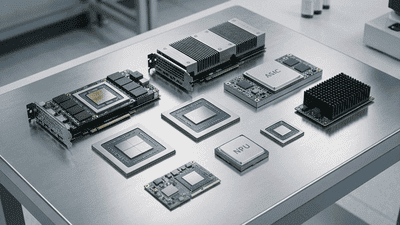
China’s AI chip industry is often discussed through GPUs and neural-processing units. Zhonghao Xinying offers another route: a processor designed around tensor computation, supported by its own instruction set and computing platform.
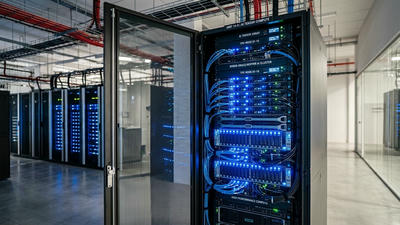
The Hangzhou-based company, also known as CL Tech, says its first-generation Chana accelerator entered mass production in 2023. In 2026, it introduced a successor, Xuyu, while a reported 1,024-chip deployment demonstrated how its architecture could become part of a larger computing installation.
That gives the “TPU breakthrough” story a concrete foundation. But “pure TPU architecture” is not a universally standardized technical category, and claims that the company alone filled a national gap require attribution rather than automatic acceptance.
The central theme is differentiation: Zhonghao Xinying is pursuing a tensor-first alternative, not merely attempting to reproduce every feature of an established GPU.
What the Architecture Gap Actually Means
China did not lack AI accelerators before Zhonghao Xinying’s products appeared.
Domestic companies were already developing GPUs, NPUs, and other specialized computing devices.
The narrower claim concerns a commercially developed, independently designed, high-performance tensor-processing architecture with its own software foundation.
That distinction matters. It positions the company within a diverse industry rather than implying that other domestic processors could not perform tensor operations or support neural networks.
TPU Is More Than a Convenient Label
A tensor is a multidimensional collection of values. Neural networks perform extensive calculations on these structures, including matrix multiplication and related operations.
A tensor-oriented accelerator prioritizes the execution and movement patterns associated with that work.
The term TPU is strongly associated with Google’s processor family, but Zhonghao Xinying describes its own design as a general-purpose tensor processing unit, or GPTPU.
That does not make it a Google-compatible product. Its architecture, instruction set, and software environment need to be evaluated independently.
“Pure” Does Not Mean the Chip Contains Only Matrix Units
A practical accelerator needs control, data movement, memory access, and mechanisms for handling operations outside its principal arithmetic engines.
The presence of those functions does not contradict a tensor-first design.
“Pure TPU” is therefore better understood as an architectural positioning claim than a literal statement about every circuit.
For readers, the useful question is which functions drive the design and how software uses them. The marketing label alone cannot establish efficiency, flexibility, or performance.
Chana Established the First Commercial Foundation
Reporting in November 2025 described Chana as Zhonghao Xinying’s flagship first-generation chip and relayed the company’s statement that production began in 2023.
The company emphasized self-developed IP cores, a custom instruction set, and an in-house computing platform.
Those elements indicate architectural ownership rather than reliance on a licensed foreign processor core for the central computing design.
They do not independently establish that fabrication, packaging, memory, tools, and every other production input are domestic. Architectural control and complete supply-chain localization remain different measures.
The A100 Comparison Needs Careful Reading
Zhonghao Xinying claimed Chana delivered up to 1.5 times the compute performance of Nvidia’s A100, reduced energy consumption by 30% for comparable large-model workloads, and brought unit compute cost to 42% of the comparison product.
These were company claims reported by the press, not independently established results across all applications.
The baseline also matters: A100 is an older generation, not Nvidia’s newest accelerator.
A favorable comparison can demonstrate progress without proving current frontier leadership.
Performance, Energy, and Cost Are Different Claims
Arithmetic capability, workload completion time, electricity use, and cost per result measure different outcomes.
A product can improve one without improving the others by the same percentage.
For example, higher theoretical compute provides limited value if memory or communication prevents the application from using it.
A credible assessment therefore needs the model, precision, batch size, system configuration, and measurement boundary. Without those details, the figures are useful indicators of company positioning rather than complete purchasing evidence.
Xuyu Makes the Story About Iteration
Xinhua reported that Zhonghao Xinying formally introduced Xuyu on June 30, 2026.
The reported specifications included 896TFLOPS of mixed-precision floating-point capability, 1,792TOPS for eight-bit inference, and a rated power of 600W.
The same coverage relayed a claim of approximately three times Chana’s performance.
These figures describe an announced development step. They should not be treated as independently verified model throughput or proof that all planned Xuyu systems were already operating at commercial scale.
Why a Second Generation Matters
A first product establishes that a company can develop silicon. A successor tests whether it can accumulate learning and sustain a roadmap.
Customers need software continuity, predictable support, and an upgrade path.
A more capable chip can still create disruption if applications require substantial rework.
For Zhonghao Xinying, the important question is whether Xuyu strengthens the platform rather than simply improving a specification sheet. Repeat customer deployment would provide stronger evidence than the launch alone.
Tensor-First Design Can Reduce Unnecessary Work
A specialized architecture can organize computing resources around operations expected to dominate its target workloads.
That can reduce the importance of capabilities needed in a broader-purpose product.
But specialization is not automatically efficient. Data placement, scheduling, and supported operations still determine how much useful work the hardware performs.
The advantage emerges when the workload matches the architecture. It weakens when important operations require inefficient execution paths or frequent movement between different processing resources.
Memory Remains a Fundamental Constraint
AI models need capacity for weights, intermediate results, and other working state.
Bandwidth determines how quickly that information reaches the arithmetic engines.
A powerful tensor unit can remain underused if data arrives too slowly.
For evaluating Chana or Xuyu, memory specifications and achieved access behavior matter alongside compute ratings. Where those details are not publicly established, they should remain open questions rather than be filled with assumptions about the architecture.
The Compiler Turns Hardware into a Platform
A custom instruction set needs software that maps model operations onto the chip efficiently.
The compiler must select execution paths, arrange data movement, and manage available resources.
Libraries and runtime software then make that capability accessible to applications.
This is why the company’s claim of an in-house computing platform matters. The commercial challenge is not merely designing arithmetic hardware; it is making customers’ workloads run correctly and effectively on that hardware.
Framework Compatibility Is Not Complete Portability
Supporting a familiar AI framework can reduce the difficulty of adoption.
It does not guarantee that every operator, plug-in, custom kernel, or distributed workflow transfers without modification.
A model may execute correctly while still requiring optimization to reach acceptable performance.
For customers, the useful test is their actual software stack. Broad compatibility language should be followed by workload-specific validation and a realistic estimate of migration effort.
The Thousand-Chip Cluster Adds a Deployment Milestone
In July 2026, Xinhua reported the commissioning of an East China domestic TPU computing project using 1,024 Chana chips in its first phase.
The report described an aggregate scale of 400P.
That is evidence of a substantial installation, but the headline does not establish equivalent application performance against another cluster or identify every condition behind the aggregate figure.
For analysts, the important next evidence concerns utilization, reliability, workload support, and follow-on customer demand.
Adding Chips Does Not Guarantee Proportional Performance
A distributed workload needs efficient communication and balanced execution.
Some applications scale well; others spend increasing time moving data or waiting for synchronization.
Large systems also require dependable recovery from failures.
The cluster therefore tests more than Chana’s individual computing capability. It tests the networking, software, and operations that turn many accelerators into one useful computing environment.
Training and Inference Need Separate Evaluation
Training updates model parameters and can require extensive distributed communication.
Inference produces outputs and places different emphasis on latency, throughput, memory use, and service cost.
A tensor-first design may support both, but its strengths can differ across workloads.
For market forecasts, adoption should be segmented. A successful training demonstration does not independently establish the best economics for interactive inference, and a strong inference result does not prove broad training capability.
Manufacturing Is a Separate Commercial Test
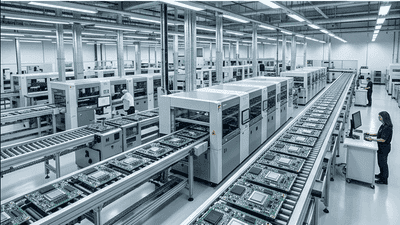
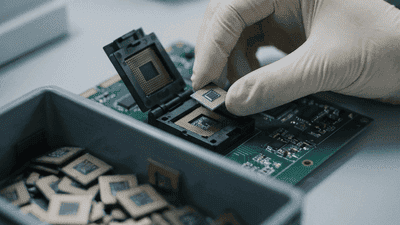
Design ownership does not eliminate the requirements of fabrication, packaging, screening, and final testing.
Accepted yield influences cost and available output.
Failures detected after assembly can consume substantial accumulated manufacturing value.
For Zhonghao Xinying, production claims are important milestones, but publicly undisclosed yield or foundry details should not be invented. The strongest evidence would connect manufacturing progress with dependable deliveries across multiple production periods.
Power Savings Must Survive the System Comparison
A chip-level efficiency claim does not automatically describe the electricity consumed by the full installation.
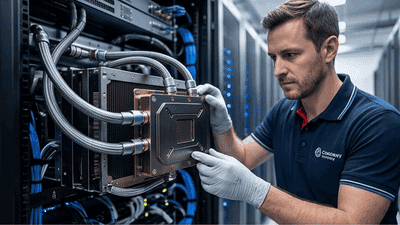
Memory, networking, power conversion, and cooling contribute additional loads.
The amount of useful work delivered also matters.
For buyers, comparisons should use equivalent tasks and quality requirements, including the surrounding infrastructure. Strategic availability can justify a different trade-off, but that trade-off should remain explicit.
Independent Architecture Does Not Mean Unlimited Access
An independently developed instruction set can reduce dependence on particular licensed processor technologies.
It does not remove reliance on manufacturing tools, memory, materials, or other suppliers.
Export controls and supply conditions can affect different parts of that chain.
For planning, the appropriate approach is to map current dependencies and review relevant transactions individually. Neither an open claim of self-developed IP nor a domestic product label establishes complete immunity from external constraints.
The Business Case Must Include Adoption Costs
A lower hardware price can be attractive, but customers also pay for software adaptation, validation, training, and support.
Maintaining multiple computing environments can add complexity.
Those costs may be worthwhile if the platform provides dependable capacity or better economics.
The relevant measure is total cost per acceptable workload outcome. That is more informative than a unit-compute claim derived from selected inputs.
What Would Confirm a Durable Breakthrough?
The clearest indicators connect architectural differentiation with repeat commercial use.
- Independent workload results with defined precision and quality.
- Reliable software support across important models.
- Measured cluster scaling and sustained utilization.
- Dependable production deliveries rather than launch claims alone.
- Successful customer transitions between chip generations.
- Transparent system-level power and cost comparisons.
- Repeat deployments and a credible support organization.
Together, these measures would show that the tensor-first approach is becoming a durable platform.
A New Architectural Option, Not a Finished Verdict
Zhonghao Xinying has made China’s tensor-processing route more concrete through Chana, the Xuyu launch, and a reported thousand-chip deployment.
That supports a meaningful architectural breakthrough without proving universal performance leadership or complete supply-chain independence.
The lasting significance will depend on execution: software that developers can trust, manufacturing that customers can rely on, and systems that deliver useful computing at sustainable cost. Filling an architectural gap is the beginning. Building a repeatable computing business is the next test.